Skip to content

AI Product

Unharnessed Agents Power the Future of AI Products

This post follows on from The AI Product Era You're Building For Might Already Be Over. There I argued that AI product development is moving toward agentic runtimes. Here I want to sharpen that claim: the future will be composed of agents, but the term "agent harness" is already limiting how we think about what those agents can become.

We should unharness our agent harnesses and call them what they are: agents! And in the future they won't just be coding assistants. They will be personal assistants, interface builders, workflow operators, and collaborators in almost every part of digital life.
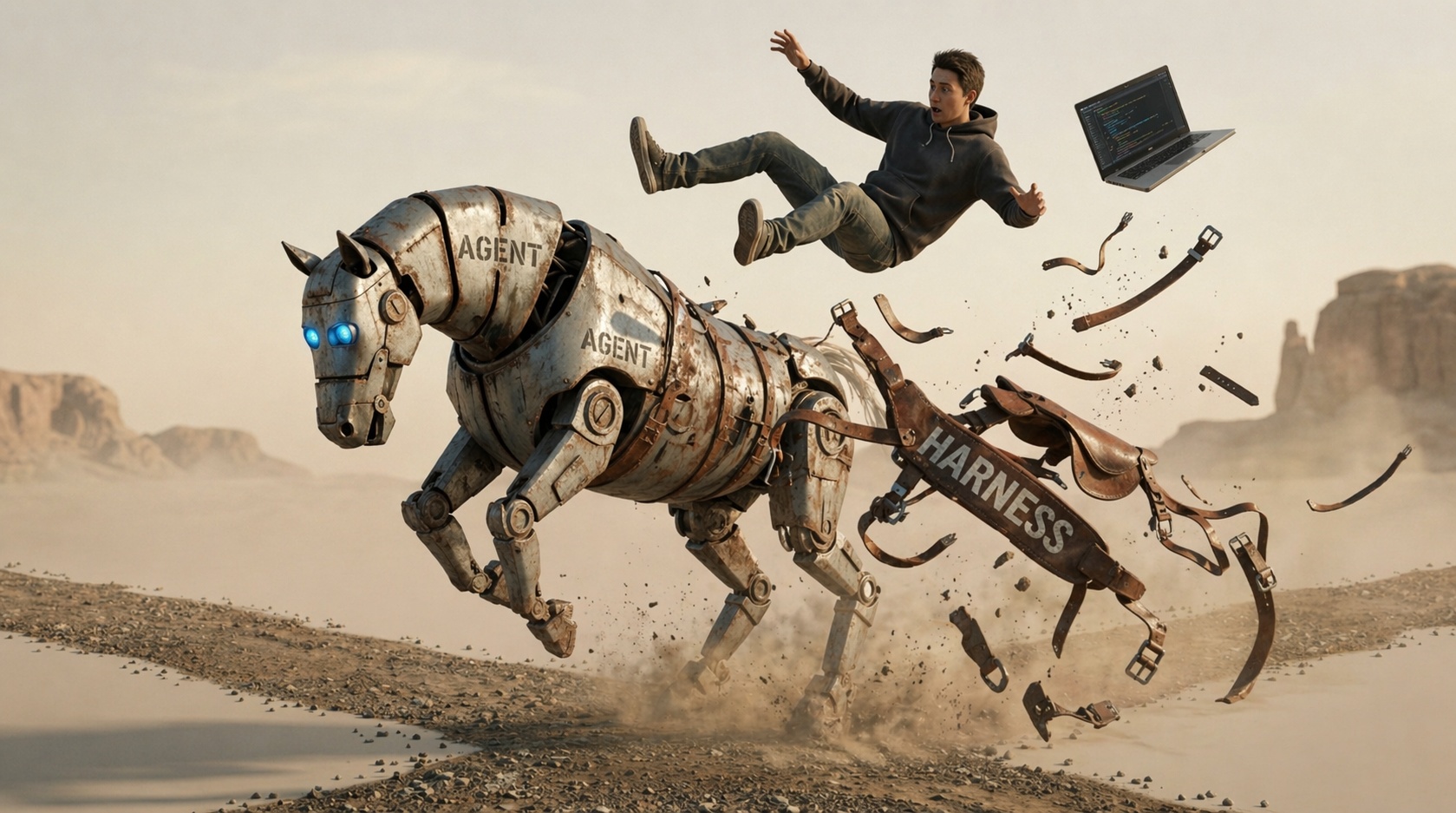
A robotic bronco labeled AGENT bucks off a software developer as a saddle labeled HARNESS breaks free

The AI Product Era You're Building For Might Already Be Over

At the end of 2022, ChatGPT launched and immediately set records as the fastest-rising consumer product of all time. It gave us a glimpse of something genuinely alien. Humans are special - we make tools. But for the first time ever, we made a tool that could speak back.

Since then, we've seen several eras of growth. Ideas and approaches have come and gone as we've tried to figure out how to actually use this thing. With every era, the good ideas of the last are trained into the models, incorporated into their APIs, encoded as best practices, and often obscured by a new layer of abstraction.

We are now at the beginning of a new era - and this one is going to make the earlier ones look like a warm-up act.

In this post I'll walk through the history of AI product development, the present revolution, and what might be coming next. If you're building AI products, you need to understand this trajectory: to avoid building things that get immediately disrupted, to build things that hold up over time, and to take full advantage of what the technology can actually do.

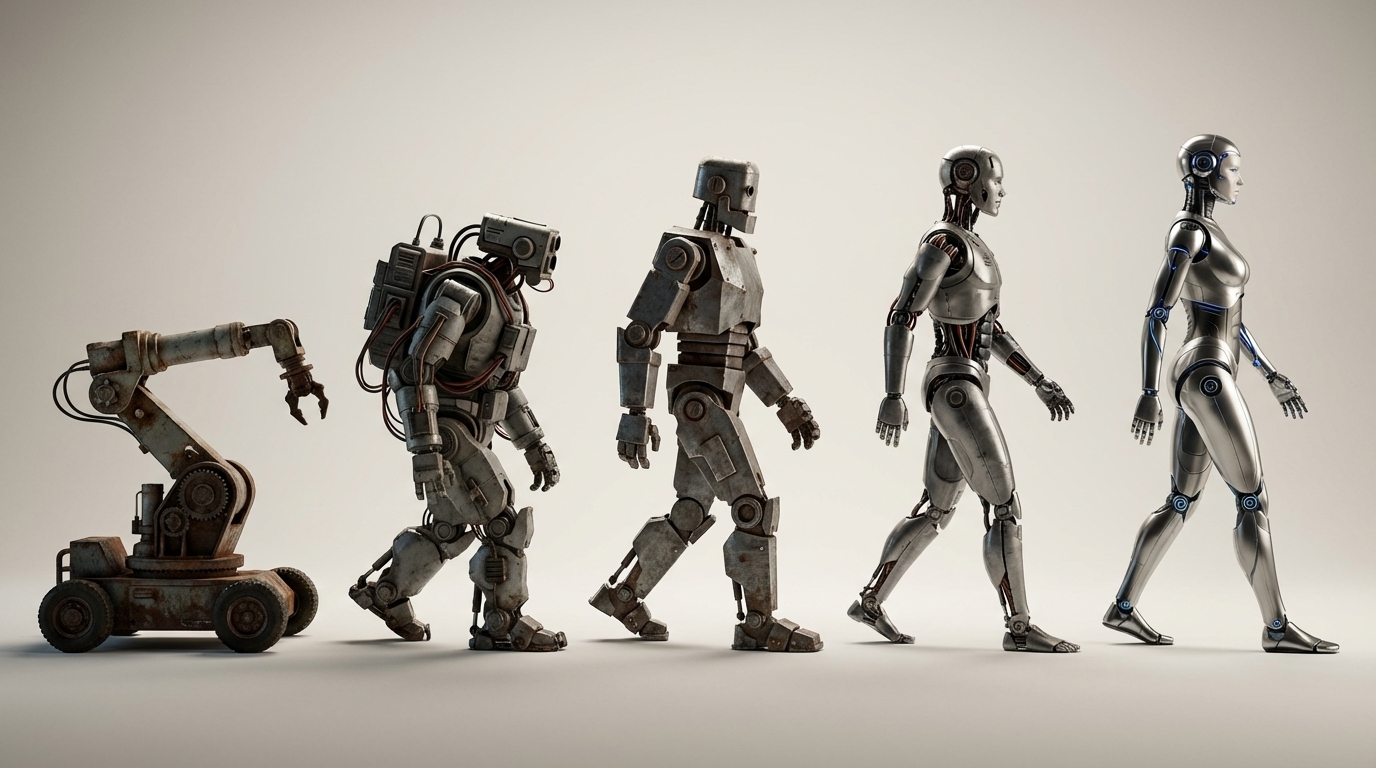
The March of Progress, reimagined: from industrial robot arm to autonomous humanoid agent